
The Accessibility Gap: How Poor Design Is Excluding Half Your Potential Customers
There’s a version of website design that looks excellent in a portfolio, performs well in a client presentation, and quietly turns away a significant portion of the real people it was supposed to serve. No error messages. No broken functionality. Just a site that a meaningful percentage of actual visitors cannot read, navigate, or use. And the business running it has genuinely no idea.
1. A Fifth of the Population. Worth Pausing On.
Roughly one in five people live with some form of disability. Visual impairments. Motor limitations. Cognitive differences. Hearing loss. Each group interacts with websites in ways that standard design frequently fails to account for. Low-contrast text that looks clean and modern on a designer’s calibrated screen becomes genuinely unreadable for someone with reduced visual acuity. A navigation menu that requires precise cursor control excludes keyboard users and people using switch access devices.
Any web design company in Auckland working for clients who want to grow their customer base should be treating accessibility as standard practice. Not an optional bolt-on. Not a compliance exercise. A core component of website design that makes the site work for the full range of people who might use it.
2. Where Website Design Gets It Wrong Most Often
Contrast is the most common failure. Pale grey text on a white background is a design choice that trends well and reads badly for a large portion of the population, including most people over fifty in anything other than perfect lighting.
Images without alt text are invisible to screen readers. A product photograph that has no description isn’t just an accessibility gap. It’s a missed indexing opportunity and a broken experience for every visitor using assistive technology to browse and shop. Forms without clearly associated labels confuse screen readers and create friction for users who depend on them. Buttons labelled ‘click here’ tell a screen reader user nothing about where clicking will lead.
None of these require complex solutions. They get skipped because they weren’t in the original brief, and nobody checked.
3. Accessibility and SEO Are Solving the Same Problems
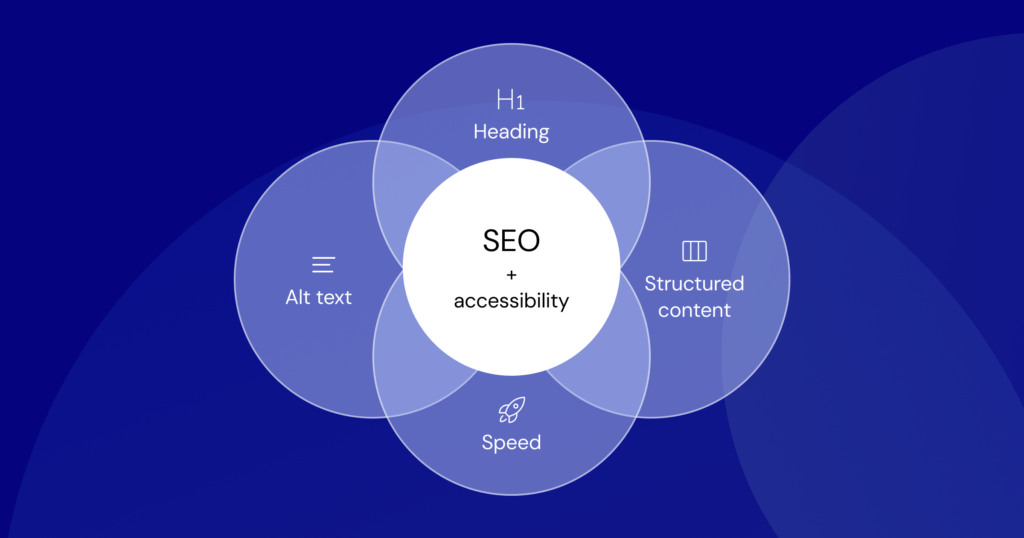
This is the part that tends to get attention when the ethical argument hasn’t landed. Accessible website design and good SEO practice overlap substantially. Alt text improves image indexing. A clear heading hierarchy helps both screen readers and search crawlers understand the page structure. Fast load times benefit assistive technology users and improve Core Web Vitals scores.
A web design company in Auckland that builds with accessibility in mind isn’t doing extra work for a subset of users. It’s producing better website design for every user, including the algorithms that determine whether the site gets found in the first place.
4. Legal Risk Is Growing and Is Already Here
Web accessibility lawsuits have increased year on year in the United States. The UK Equality Act and New Zealand’s Human Rights Act both carry provisions relevant to digital accessibility. Businesses running websites that exclude disabled users face genuine legal exposure that most owners aren’t aware of until it arrives.
Proactive accessibility work, done as part of a website design or redesign project, costs a fraction of what remediation costs after a complaint has been filed.
Where to Start
Run a free audit. WAVE and Axe are accessible from a browser and surface the most common failures in minutes. Fix the contrast ratios. Add the missing alt text. Label the form fields. Test the keyboard navigation tab order. Not every issue requires a development sprint.
If a redesign is already being considered, choose a web design company in Auckland that includes accessibility standards in the build process by default rather than treating them as a post-launch consideration. The gap between an accessible site and an inaccessible one is almost entirely decisions made at the design stage. Make the right ones first.